
The Walls Remember
October 31, 2025
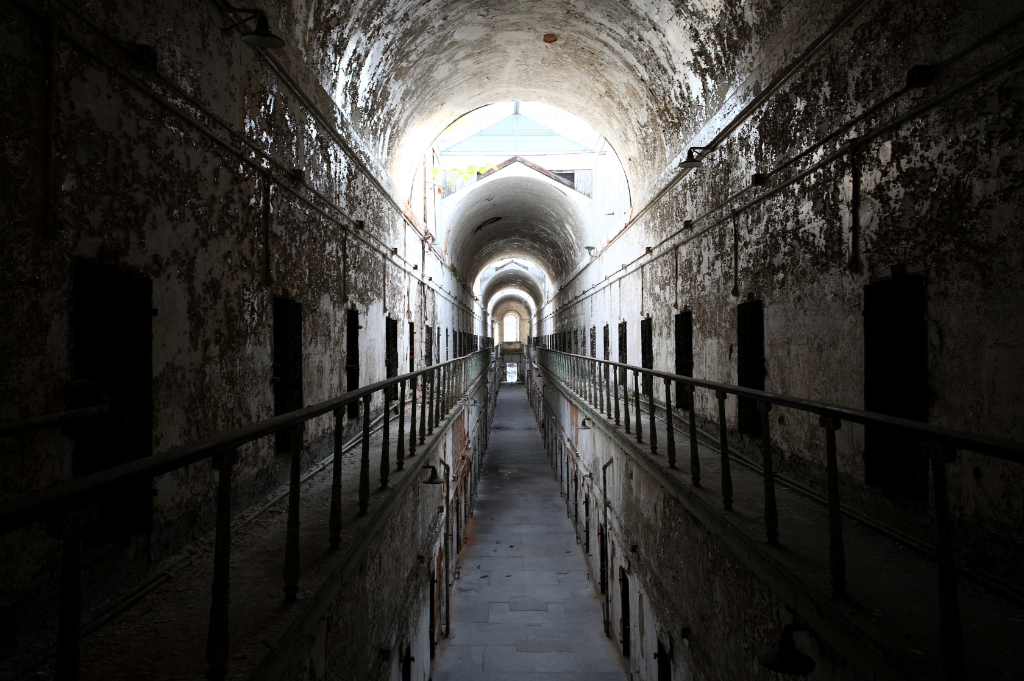
You can see the walls long before you reach them.
They rise from the middle of the city like a warning — thick, gray, and too heavy for the street that holds them. Traffic hums nearby, but once you pass through the gate, the air shifts. It’s cooler. Quieter. The kind of quiet that makes you listen.
Eastern State opened in 1829 with a promise that silence could save a man’s soul. One person to a cell, one small skylight above the bed, one narrow door that closed like the end of the world. Prisoners ate alone, worked alone, prayed alone. They were meant to reflect, to change.
Most simply broke.
Some carved prayers into the stone. Others whispered to themselves until the sound of their own voice was the only proof they existed. Guards said the silence grew so deep it rang.
Decades passed, and the place filled past its purpose. The quiet cracked into noise — laughter, shouts, and everything in between. Al Capone served time here; his cell had a rug, a lamp, a radio that played late into the night. He told guards he heard voices when the music stopped.
When the prison finally closed in 1971, the city kept moving while the fortress stayed still. Roofs caved, vines crept through windows, dust gathered in drifts. For a while, the walls held nothing but weather.
Then people started to come back.
They said footsteps followed them down empty corridors. Doors closed without wind. In Cellblock 12, lights flickered and refused to stay steady. Maybe it was wiring. Maybe it was the air remembering how to breathe.
I walked those halls once. The light fell in narrow stripes through the ceiling, and the dust floated where it landed. The silence pressed close — not threatening, just heavy, full of what used to be there.
Some places don’t need ghosts. They just need time, and walls willing to remember.
Now the penitentiary is a museum. Students wander with cameras. Artists hang their work in the old cells. Yet beneath all the voices and movement, that old hush still waits. It’s in the mortar, in the way the air lingers after you speak.
If you stay long enough, you start to feel it — that echo, faint but steady, the sound of a place still holding what it was made to forget.
The walls remember.
They always have.
Author’s Note
Eastern State Penitentiary opened in 1829 and closed in 1971. Conceived as a model of reform, it became a lesson in the cost of solitude. Among its inmates were Al Capone and bank robber Willie Sutton. Today it stands preserved as a museum, its corridors empty and its silence intact.
Visitors often report footsteps or whispers, especially in Cellblock 12. Whether it’s memory, echo, or imagination hardly matters. What endures is the feeling — that some places hold on to every sound they were ever given.dson River rather than the Horseman. Stories of a weeping woman near the waterline date back to the 19th century and blend elements of Dutch, Native, and colonial folklore.
Leave a Reply