The House on Blackfish Point
October 23, 2025
Some houses learn your name before you say it.
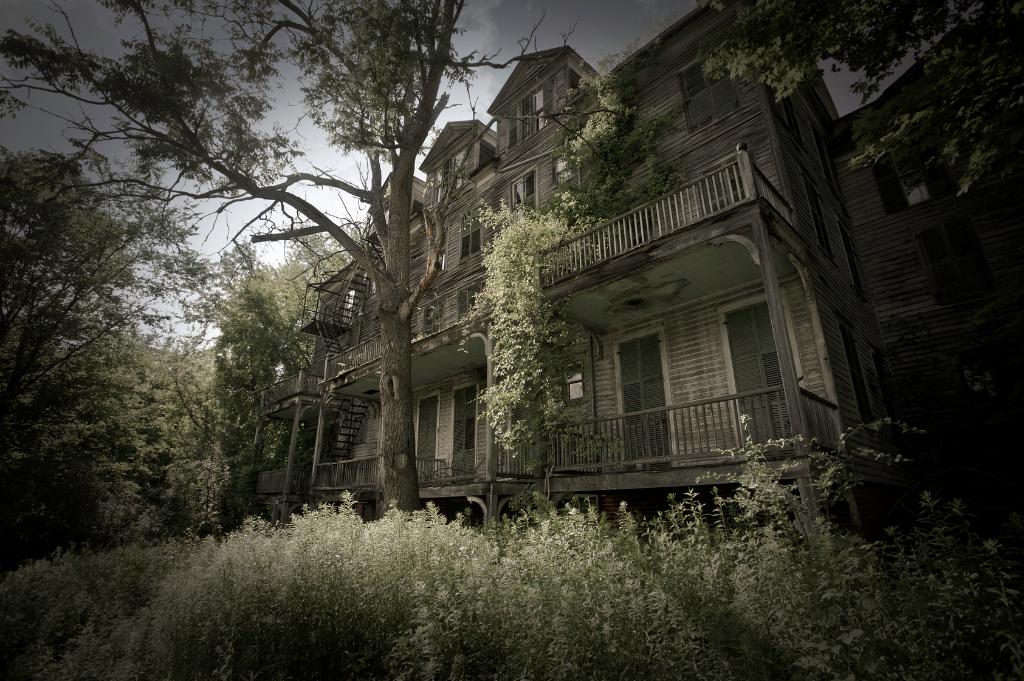
If you drive to the end of the point after dark, past the salt marsh and the last streetlight that flickers like it’s thinking it over, the road turns to sand and the wind starts talking. Not like a storm. Lower. Closer. The old-timers call it the house breathing.
It’s a shingled thing sitting crooked above the tide line, a sea captain’s place from the 1880s, gray as driftwood, windows set like tired eyes. Folks around Truro swear it tilts a little more each year, but somehow it never falls. Whole blizzards roll through and it’s still there in the morning, hunched behind those dead hydrangeas like a dog that’s been left too long on a chain.
You’ll tell yourself you’re just going to look. That’s what we did. Four of us, dumb and warm from somebody’s garage beer, headlights bouncing over sand ruts. Even before we killed the engine, we could hear it: a long, slow pull like the house was drawing breath, and then a soft push from somewhere inside, as if air were being let out through old wood.
“Wind,” I said. But the phrasing felt wrong in my mouth. Wind doesn’t keep time. This did.
There’s a front door you won’t see until you’re right on it—paint flaked down to raw wood, a brass keyhole green with salt. When you get near it, your ears pop like you’re gaining altitude. You can feel the pressure change, a little tug in your chest that makes you want to lean forward. Just a step. Then another.
We didn’t knock. You don’t knock on a place like that.
We just put our hands on the door and it opened slow, as if it had been waiting for a lighter touch.
Inside, the air was wrong; it was cold the way a basement is cold, with a sweet rot threaded through it… flowers that died and nobody threw away. The floorboards gave a tired little sigh. The wallpaper had peeled itself into curls. There was a banister worn smooth by hands that weren’t ours.
“Hello?” Matt called, because Matt’s the kind of idiot who says hello to a dead house.
Silence. Then a reply so soft I almost missed it. Not a word—more like the hush a mouth makes before one.
We stood there long enough to hear the rhythm again: draw in, push out.
Like the rooms were full of lungs.
“Let’s go,” I said. I meant it.
But there was a hallway to the left, and something about it felt… pulled. Not like curiosity. Like gravity. I stepped toward it without deciding to, like the floor had sloped under my feet.
There are three doors down that hall. I can tell you the paint colors even now: a yellow that’s turned to nicotine, a blue gone the color of bruise, and one with nothing left at all—only wood, scraped and bare. The bare one was open a crack, and behind it there was a sound I knew without wanting to know it: the click of a pull-string on a lightbulb.
The bulb swung once, then steadied, and we saw a room with nothing in it except a mirror leaned against the far wall. Tall, old, silvering at the edges; the kind that eats whatever shade you’re wearing and gives it back wrong.
We weren’t in it.
I mean—we were. But not how we should’ve been. There we were by the door, all four of us, but our mouths were closed while the mirror versions were whispering. I could see lips moving. I couldn’t hear the words.
“Stop,” Claire said. “I don’t want to—”
The house exhaled, and the door behind us shut with a soft click. Not violent. Polite. That was worse.
When the mirror mouths stopped moving, all four of our reflections turned their heads at the same time, like they’d heard a name called from deeper in the glass. Only it wasn’t deeper. It was closer. It was here.
“Do you hear that?” Matt whispered.
Something was walking upstairs. Slow. Bare. Heel-to-toe across a memory of carpet. And every footfall made the mirror tremble like it was a pond and someone had dropped pebbles in it.
We backed out of the room because backing out was the only way to leave without turning our backs on the glass. The hall tilted more. The air kept pulsing. Draw in. Push out. The stairs creaked once, twice, three times, and stopped just above us, as if the next step would put whatever-it-was on the landing.
“Say your names,” Claire breathed. Her nails were in my sleeve. “Don’t let it say them first.”
I don’t know why that made sense. It did. We said our names—first and middle and last, like kids tattling to a teacher—and with every syllable, the pressure in the house shifted, annoyed, like we’d ruined the punchline.
The door at the end of the hall opened. Not the one we came through. The back door, the one facing the water. Cold moved in, salt and night and relief so sharp it felt like being cut. We ran. Not cool, not careful, just ran, slamming shoulders into wood and blowing ourselves out onto the dunes.
Behind us, the house breathed in one last time, long enough to sting my lungs. Then it held it. Held it like it was waiting to hear us speak again.
We didn’t. We kept going until we reached the car, and even there I didn’t feel right about saying anything out loud. Like it would hear, and learn me better.
I don’t go out to Blackfish Point anymore.
Every now and then, though—when the tide’s going out and the wind is steady off the bay—I get that feeling in my chest. The little tug. The pull of pressure changing in a closed-up room. And sometimes, just before I fall asleep, I’ll hear that soft click of a pull-string, somewhere I don’t have a mirror.
If you go, don’t knock. Don’t whisper.
And whatever you do, don’t let that house guess your name first.
Leave a Reply